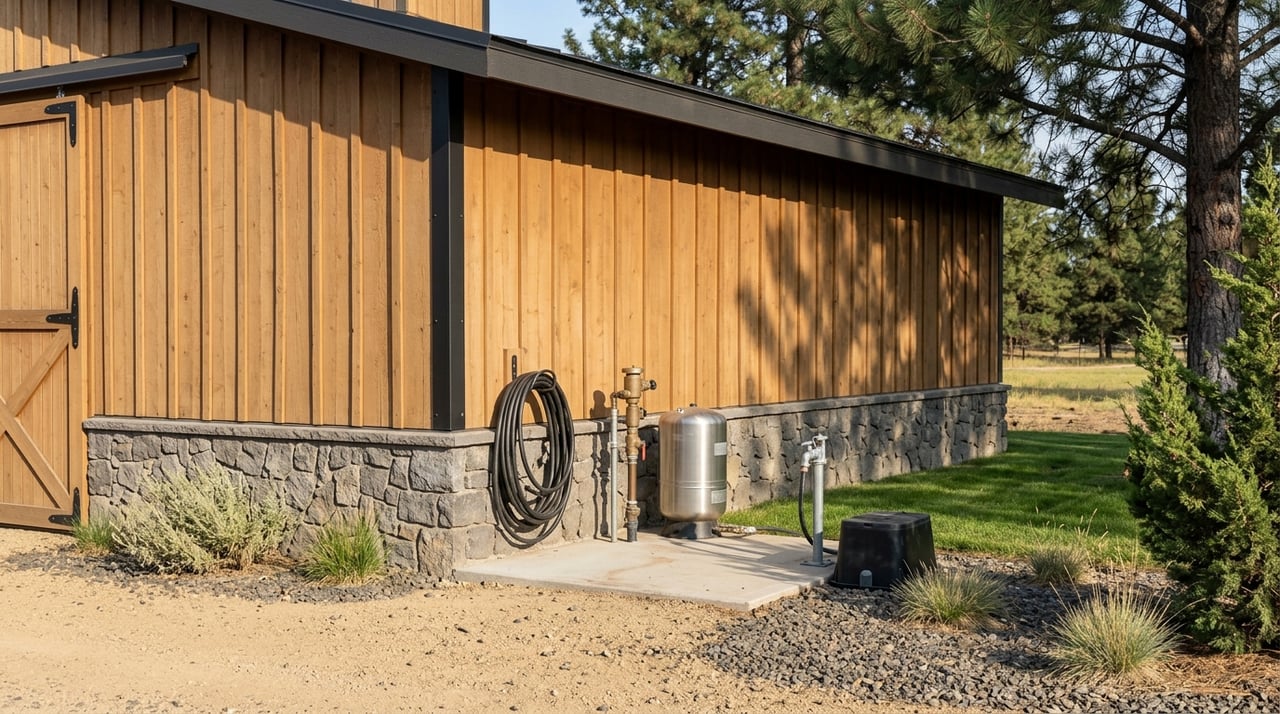
If you are shopping for acreage in Tumalo, water can be one of the biggest make-or-break details on the property. A home may have a private well for household use, irrigation district delivery for pasture, and separate rules for livestock water, all on the same parcel. When you understand how those pieces fit together, you can ask better questions, avoid surprises, and feel more confident about what you are buying. Let’s dive in.
Why water works differently on Tumalo acreage
In Tumalo, acreage properties often rely on more than one water source. Household water may come from a private well, while irrigation water may come through Tumalo Irrigation District, and livestock use may follow its own rules.
That matters because water is not a one-size-fits-all feature. The source serving the house may not be the source serving the land, and the water you can legally use for one purpose may not cover another.
Know the three water categories
A helpful way to evaluate Tumalo acreage is to separate water into three buckets: household water, irrigation delivery, and livestock water. Each category can have different costs, seasonal patterns, and use limits.
If you are looking at horse property, small farm ground, or land with pasture, this distinction becomes especially important. It is often the key to understanding how a property actually functions day to day.
Household water
Private wells are common in Deschutes County. According to Oregon Health Authority, private wells are owner-maintained, not maintained or regulated by state or county government, so the owner is responsible for routine testing and maintenance.
Deschutes County estimates that about 17,000 private wells serve 34,846 people in the county. That makes well due diligence a normal part of buying acreage in the area, not an unusual complication.
Irrigation water
Tumalo Irrigation District is the local surface-water delivery system many acreage buyers will encounter. The district manages diversions from Tumalo Creek and the Deschutes River, uses Crescent Lake storage, serves 685 patrons, manages more than 80 miles of piped and open canals, and irrigates more than 7,400 acres.
For many buyers, irrigation delivery is what supports pasture, hay ground, or other cultivated acreage. It can also affect how usable the land feels during the growing season.
Livestock water
Livestock water is its own category, and that distinction matters on equestrian and rural properties. Tumalo Irrigation District states that stock water use is limited to direct livestock consumption and the minimum conveyance needed to deliver that water.
Using stock water to irrigate pasture, fill storage, water landscaping, or supply a home falls outside stock water. If you are buying a horse property, this is one of the most important questions to clarify early.
Understand Oregon water use basics
In Oregon, water use follows the prior appropriation system. That means water rights are tied to priority date, and you do not automatically gain the right to use water just because it crosses or sits under your property.
Some groundwater uses are exempt from permitting, including stock watering, watering up to one-half acre of lawn or noncommercial garden, and single or group domestic uses up to 15,000 gallons per day. Commercial crop irrigation is not exempt, and even exempt uses must still be beneficial and without waste.
For buyers, the practical point is simple: never assume a parcel’s water setup tells the whole story by itself. You want to know not just where the water comes from, but what it can legally be used for.
What beneficial use means in Tumalo
Tumalo Irrigation District says beneficial use means the land is in production or cultivation. The district also says irrigation water should not be used on rock piles, driveways, under structures, or for dust abatement.
The district uses annual June aerial reviews to help document beneficial use. On a real property level, that means a parcel’s irrigation picture is not just about having access. It is also about how the water is actually being used on the ground.
Irrigation district details buyers should ask about
Not all irrigation delivery works the same way across Tumalo acreage. The district notes that the upper piped portion tends to deliver more consistent pressure, while the lower ditch portion depends more on remaining flow, gate settings, and canal condition.
That is why irrigation questions are usually parcel-specific, not something you can answer broadly by area alone. Two properties in the same general part of Tumalo may perform differently depending on their delivery setup.
Annual assessments still matter
Tumalo Irrigation District says annual assessments are due every year whether water is used or not. The full assessment also still applies if shortages reduce or eliminate deliveries.
For a buyer, that means irrigation costs are not simply optional because you decide not to turn water on one season. It is worth reviewing current assessments as part of your property budget.
Turn-on and turn-off are coordinated
Water turn-on and turn-off requests must go through the district office so they can be coordinated with ditch riders and operations staff. That may sound like a small operational point, but it helps explain how managed and schedule-based district service can be.
If you are new to acreage living, this is one more reason to learn the property’s irrigation routine before closing. It helps you understand what ownership will look like in practice.
Private well basics for Tumalo buyers
The only way to know whether private-well water is safe is to test it with an accredited laboratory. Oregon Health Authority recommends annual coliform and E. coli testing, annual nitrate testing, and arsenic testing every three to five years.
Testing may also be needed more often after septic problems, illness, or equipment failures. Deschutes County adds practical guidance such as keeping fuels and chemicals away from the well, keeping runoff draining away, and keeping septic systems at least 100 feet from the well.
Oregon well testing rules during a sale
Oregon’s Domestic Well Testing Act requires a seller with a domestic well to test for arsenic, nitrate, and total coliform bacteria, share the results, and file the RET form. Oregon Health Authority says those results are valid for one year.
Some properties are exempt from these RET rules, including spring wells, irrigation-only wells, and wells on undeveloped land. If you are buying a more complex acreage property, it is wise to confirm exactly what type of well serves the property and which testing rules apply.
Well logs and Well ID matter
Oregon Water Resources Department says well reports have been required since 1955 and can usually be found online. These reports can show who owned the well, how it was constructed, and how it performed at the time the report was filed.
For buyers, the most useful data points are often depth, casing size, flow rate, and water level. OWRD also says the Well ID label is required within 30 days of property transfer.
If the well needs work
If repairs or upgrades are needed, OWRD recommends getting at least three bids, checking references, and confirming the contractor’s license and bond. Deschutes County also recommends using a licensed well driller or pump installer for repairs or modifications.
If a well’s output falls, dry wells should be reported to OWRD. On a purchase, that makes pump performance and current water-level information especially worth reviewing before you close.
Water rights and reporting can follow the property
Some water rights include reporting conditions such as pump tests and static water-level data. For acreage with irrigation wells or other groundwater rights, buyers should ask whether any reporting obligations transfer with the property.
This is one of those details that can be easy to miss if you are focused only on the home, barn, or views. On rural property, the paperwork tied to water can be just as important as the physical improvements.
Smart due diligence questions to ask
When you tour Tumalo acreage, it helps to ask very direct questions about water. The goal is to understand what serves the house, what serves the land, and what use rights or obligations come with each source.
Here are some of the most useful questions to raise:
- What source serves the house, and what source serves the land?
- Which acres are actually irrigated?
- Is the irrigation water district-based, well-based, or both?
- Is the use stock water, pasture irrigation, or crop irrigation?
- Are assessments current, and what happens in shortage years?
- Is there a current well log, Well ID, and water-quality test?
- Has the pump been tested, and is the static water level documented?
- Is there a valid septic site evaluation, and could the well or septic layout affect future improvements?
The right specialists can save time
On Tumalo acreage, water due diligence often involves more than one expert. Depending on the property, that may include Tumalo Irrigation District for service and assessment questions, OWRD or the local watermaster for water-rights and well-record questions, an accredited lab for water testing, and Deschutes County Environmental Health for private-well and onsite wastewater questions.
If the property needs well work, a licensed well constructor or pump installer may also be part of the process. Deschutes County’s Private Well Safety Program also offers technical assistance and, when staffing allows, sample collection support.
What this means for your Tumalo property search
The biggest takeaway is that water on Tumalo acreage should be reviewed as a system, not a single feature. A property can look ideal for horses, pasture, or long-term rural living, but the real fit depends on how household water, irrigation delivery, and livestock water work together.
When you sort those pieces early, you make better comparisons between properties and reduce the chance of expensive misunderstandings later. That is especially true in Tumalo, where acreage value and daily livability are often tied closely to the details behind the water setup.
If you are considering acreage, equestrian property, or land in Tumalo, having local guidance can make the due diligence process much clearer. Heather Osgood brings a practical, locally grounded approach to helping you evaluate the details that matter most.
FAQs
What water sources are common on Tumalo acreage?
- Tumalo acreage often uses more than one source, with a private well serving the home and Tumalo Irrigation District serving pasture or cultivated ground.
What does a private well owner need to do in Tumalo?
- Private well owners are responsible for testing, maintenance, and general well care because private wells are owner-maintained.
What should buyers know about Tumalo Irrigation District assessments?
- Annual assessments are due every year whether you use the water or not, and the full assessment still applies even if shortages reduce deliveries.
What does stock water mean on a Tumalo horse property?
- Stock water is limited to direct livestock consumption and the minimum conveyance needed to deliver it, not pasture irrigation, home supply, or landscaping.
What well tests are required when buying a home with a domestic well in Oregon?
- A seller with a domestic well must test for arsenic, nitrate, and total coliform bacteria, share the results, and file the RET form, with results valid for one year.
What records should buyers review for a Tumalo private well?
- Buyers should review the well log, Well ID, water-quality test results, pump information, flow rate, and static water-level data if available.
Why is water due diligence parcel-specific in Tumalo?
- Delivery method, pressure, water use rights, assessments, and seasonal performance can vary from one property to another, so acreage water questions usually need to be answered at the parcel level.