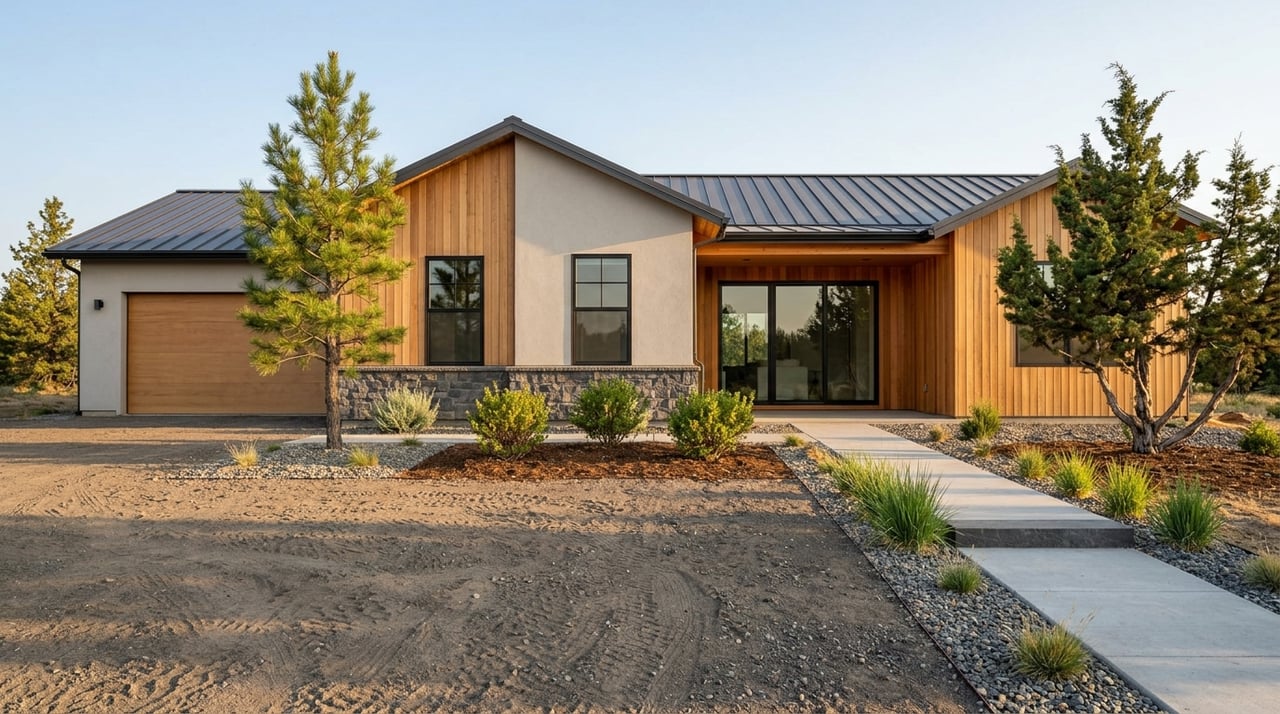
Thinking about a brand-new home in Redmond or a place with a little land? It is an exciting search, but it can also get complicated fast once you move beyond the photos and start looking at zoning, utilities, septic, wells, and irrigation. If you want to understand how new construction and small-acreage properties work around Redmond, this guide will help you ask smarter questions and make more confident decisions. Let’s dive in.
Where Redmond new construction is usually found
In Redmond city limits, new construction is most often found in subdivisions or on infill lots. These properties are typically tied into city services, including water, sewer, stormwater, and mandatory garbage service inside city limits. For many buyers, that creates a more predictable ownership experience.
That city-served setup can be a big advantage if you want a newer home without managing private systems. It also means your due diligence often starts with confirming lot details, utility access, and any planning requirements tied to the site. Redmond provides mapping tools that can help give context on property boundaries, subdivisions, and infrastructure.
Where small-acreage properties are more common
If you move toward the city edge or into unincorporated Deschutes County, you are more likely to find rural-residential parcels and properties connected to irrigation. These areas can offer more room for hobbies, animals, equipment, or simply breathing space. They also tend to come with more layers of review.
Deschutes County identifies rural zones such as RR-10 and MUA-10 as common rural residential designations. These zones allow single-family dwellings, ADUs, agriculture, small-scale horse stables, and limited home businesses. UAR-10 is described as a transition zone between urban and rural development.
One detail that matters is parcel size. In RR-10, the standard minimum for land division is 10 acres, though some older parcels may be smaller and still be developable even if they cannot be divided further. That distinction is important if you are buying with future plans in mind.
City lot or acreage: what changes
The biggest difference between a city lot and small acreage is not just the amount of land. It is the systems, approvals, and long-term use of the property. A home on a city lot may involve fewer infrastructure questions, while acreage often requires more detailed review of access, wastewater, water supply, and irrigation.
That does not mean acreage is harder in every case. It simply means the property needs to be evaluated on its own terms. If your goal is privacy, room for animals, or a more flexible rural feel, that extra due diligence may be well worth it.
What to know about permits and timelines
With new construction, timing is usually shaped by process, not just by a target closing date. Oregon requires permits for new construction, and local land-use requirements come first. Oregon also states that a permit can expire if work does not begin within 180 days, or if work is suspended or abandoned for 180 days or more.
In Redmond, most buildings need site and design review unless they are exempt. The city recommends checking with Planning for new buildings or uses of 500 square feet or more. Redmond also offers a no-cost pre-development meeting where planning, building, engineering, and fire staff can discuss topics like access, water and sewer, public improvements, and land-use process.
For buyers, this is useful because it shows how many moving parts can affect a build. Even when the lot looks straightforward, permit completeness, utility questions, inspections, and final approvals can influence the timeline. That is one reason a resale home may feel simpler if speed and certainty are your top priorities.
Final occupancy matters
In Redmond, a new single-family home or townhouse needs a Certificate of Occupancy after all required final inspections are approved. The city notes that processing can take up to two days depending on staff workload. That final step matters because it is part of what makes the home ready for occupancy.
Rural review timelines can be longer
In Deschutes County, review times depend on complete applications and can vary. The county currently posts rough queue times of about 2 weeks for intake, 12 weeks for planning review, and 3 weeks for building review on residential building permits. For onsite or septic permits, the county shows about 4 weeks for intake plus 3 weeks for onsite review, while driveway access permits are listed at about 1 to 2 weeks for intake plus 2 weeks for road review.
For a small-acreage buyer, those timelines are a reminder to plan ahead. Rural projects often involve multiple approvals, and one missing piece can slow everything down.
Small-acreage due diligence that deserves extra attention
Acreage can be rewarding, but it asks you to look closely at the land and systems behind the home. Before you get too attached to a property, it helps to work through a practical checklist. In Redmond and rural Deschutes County, a few items matter more than most.
Confirm jurisdiction and zoning
Start by confirming whether the property is inside Redmond city limits or under Deschutes County jurisdiction. That one detail can shape what rules apply, what utilities may be available, and which departments you need to contact. It also affects how you evaluate future plans for the property.
Then verify the zoning using city or county maps. Zoning can influence what is allowed now and what may be possible later, including homes, ADUs, agricultural uses, and certain accessory structures.
Understand septic status early
If the parcel is not connected to public sewer, septic review should move near the top of your list. Deschutes County requires an approved site evaluation before a new onsite wastewater permit is issued for new construction. The county also states that the system must be inspected and approved.
Incomplete applications may be returned, which is one reason septic can become a major timing issue in rural transactions. If you are buying an existing home with a septic system, Oregon DEQ recommends a professional septic evaluation during a purchase or sale, using the approved reporting form.
Check well testing requirements
If the property has a domestic well, water quality is another key item. Under Oregon’s Domestic Well Testing Act, sellers must test for arsenic, nitrate, and coliform bacteria during the transaction and share the results. The rule does not apply to every type of well, so the property details matter.
For buyers, the takeaway is simple: do not treat well water as a background detail. Make sure you understand what type of well is present and what testing requirements apply.
Review irrigation rights carefully
In the Redmond area, irrigation can add real utility and value to a small-acreage property. It can also create confusion if you assume water rights automatically cover the entire parcel. COID states that irrigation water rights are mapped to a specific place of use, and water may be applied only within that mapped area.
COID also notes that the water right must be put to beneficial use at least once every five consecutive years or it may be subject to forfeiture. Just as important, the history of the water right stays with the property, not the owner. If the property has irrigation, that history deserves careful review.
Ask about district approvals and easements
If land is being developed, reconfigured, or adjusted, irrigation issues can become more involved. COID says development and lot-line adjustments can require District approval. If water rights are present, plans may also require a complete delivery system, easements, and a recorded irrigation contract.
For buyers considering land, custom construction, or a property with future improvement plans, this is a major point. It is not enough to hear that a parcel has irrigation. You want to know where the right applies and whether any approvals or recorded requirements affect your use of the land.
ADUs and accessory structures on larger parcels
Many buyers looking at small acreage want flexibility for guest space, hobbies, storage, or future living arrangements. In both Redmond and Deschutes County, ADUs are allowed in many residential settings, but the rules are not identical. In county rural areas, ADUs are limited to eligible rural residential exception areas and generally require a parcel of 2 acres or more, along with compliance with water, sanitation, and wastewater standards.
Accessory structures can also be affected by parcel size. Redmond’s residential exemptions state that non-habitable detached accessory structures are generally limited to 200 square feet, but on parcels 2 acres or larger they may be up to 400 square feet if they are set back 20 feet from all property lines. If flexible outbuilding space matters to you, this is worth checking before you buy.
Should you choose new build, resale, or acreage?
The right fit depends on how you want to live and how much complexity you are comfortable managing. A new construction home in Redmond often suits buyers who want a city-served property and a more current floor plan or finish package. The tradeoff is that the process is permit-driven and timeline-sensitive.
A resale home can be more straightforward because it usually skips the construction approval sequence. That may simplify timing, though you may need to balance that against the home’s age, condition, and maintenance history.
Small acreage tends to appeal to buyers who want privacy, room for animals or projects, and possible irrigation. The tradeoff is a deeper level of due diligence around zoning, setbacks, water rights, septic, well quality, driveway access, and any county or district approvals. If that lifestyle is what you are after, a careful review on the front end can make all the difference.
A practical Redmond buyer checklist
If you are comparing new construction and small acreage around Redmond, use this checklist as a starting point:
- Confirm whether the property is inside city limits or in Deschutes County
- Verify the zoning on the city or county map
- Ask whether public utilities or sewer are available
- Review septic status and whether a site evaluation or inspection is needed
- Check whether the property has a domestic well and what testing applies
- Identify any irrigation rights and where the mapped place of use is located
- Ask whether district approval, easements, or irrigation contracts apply
- Consider whether a pre-development or plan review meeting makes sense
A good purchase decision usually comes down to matching the property to your goals, then verifying the details that support those goals. In Redmond, that can mean choosing the simplicity of a city lot, the flexibility of a rural parcel, or the balance of something in between.
If you want help sorting through Redmond new construction, small acreage, or land with more moving parts, Heather Osgood brings a practical Central Oregon perspective and clear guidance through the details.
FAQs
What should you check first when buying small acreage near Redmond?
- First, confirm whether the property is in Redmond city limits or under Deschutes County jurisdiction, then verify zoning, utilities, septic status, well details, and any irrigation rights.
How do Redmond new construction timelines usually work?
- New construction timelines usually follow a sequence of land-use review, permit review, inspections, and final occupancy approval rather than a simple closing-date schedule.
What septic issues matter for Deschutes County acreage?
- If the property is not on public sewer, Deschutes County requires an approved site evaluation before a new onsite wastewater permit is issued, and the system must be inspected and approved.
What well testing is required for Redmond-area rural properties?
- For qualifying domestic wells, Oregon requires testing for arsenic, nitrate, and coliform bacteria during the transaction, and sellers must share the results.
What should you know about irrigation rights on Redmond acreage?
- Irrigation rights are tied to a mapped place of use, stay with the property rather than the owner, and may require district approvals, easements, or recorded contracts when land is developed or adjusted.
Are ADUs allowed on small-acreage properties near Redmond?
- ADUs are allowed in many residential settings, but county rural ADUs are limited to eligible rural residential exception areas and generally require parcels of 2 acres or more plus compliance with water, sanitation, and wastewater standards.