Cross the Deschutes River in Bend on a weekday at 5 p.m. and you'll understand something no listing sheet will tell you. The bridges that connect the westside to the rest of town become a bottleneck, and if you work on one side of the river and buy a home on the other, that gap becomes part of your daily life whether you priced it in or not. It's a cost with no line item, and it's one of the more overlooked pieces of a decision that buyers usually reduce to a single number: the price gap between Bend's westside and everywhere else.
That gap is real. Neighborhoods like Northwest Crossing and Awbrey Butte routinely price several hundred thousand dollars above Larkspur, Mountain View, or the Orchard District on the east side of town. Most explanations for that gap stop at prestige, as if westside buyers are simply paying for an address. The 2026 data tells a more useful story, and it points to something buyers deciding between sides of the river should actually weigh before they fall for either narrative.
The Trail Access You're Actually Paying For
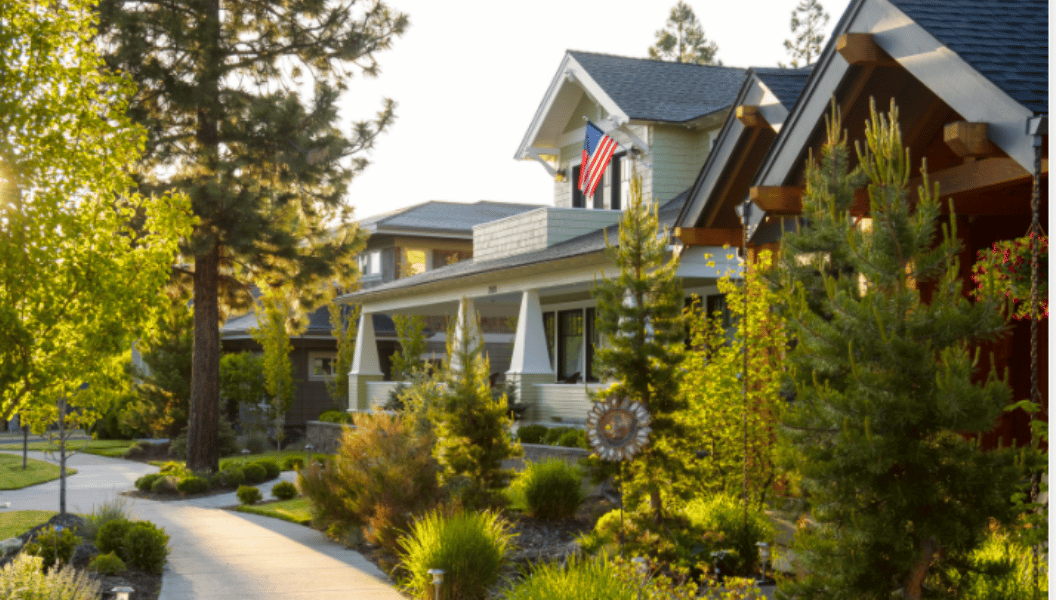
Walk through Northwest Crossing on a Saturday morning and you'll see why its homes start near $900,000 and climb well past $1.5 million for larger custom builds. The neighborhood was built around its own village core, so residents can reach restaurants, a farmers market, and daily errands without a car. It connects directly into the Phil's Trail mountain biking network and sits a short ride from Shevlin Park and Discovery Park. Awbrey Butte, just above it, commands $1 million to $2.5 million and up for a different reason entirely: large lots, mature ponderosa pines, and 180-degree Cascade views from the ridge, though you'll need a car for groceries there in a way you won't in NWX.
Old Bend, the neighborhood around downtown and Drake Park, trades square footage for proximity. Homes there typically start around $850,000 and climb past a million, and what you're buying is walking distance to the Deschutes River Trail and the restaurant and brewery corridor downtown. None of these premiums are really about the house. They're about not needing to plan your day around a car.
What the Eastside Gives Back
Cross to Larkspur, Mountain View, Boyd Acres, or the Orchard District and the math flips. Entry points run from the mid $500s to the mid $600s, and buyers get more square footage and larger lots for the money. These neighborhoods sit closer to Bend's east side employment centers and shopping corridors, and recent years have brought new restaurants and small businesses into areas that used to be considered the far side of town. What you give up is the walk-everywhere lifestyle and the direct trail access that defines the westside. You'll drive to Phil's Trail rather than ride to it.
Neither side is a compromise. They're built around different daily routines, and the price gap reflects that more than it reflects one neighborhood being simply better than the other.
The Bridge Tax
Here's the friction that doesn't show up in either column. Bend doesn't have big city traffic, but it has bridge traffic, and crossing the Deschutes River during rush hour is a genuine bottleneck. If you work on the westside and buy on the eastside for the larger lot and lower price, or the reverse, that daily crossing becomes a recurring cost measured in minutes rather than dollars, and it compounds over years of commuting in a way no closing disclosure captures. Anyone comparing a Larkspur listing against a Northwest Crossing listing purely on price per square foot is missing the variable that will actually shape their week.
The Twist Nobody's Pricing In
Here's where the obvious story about Bend's market breaks down. In April 2026, the share of Bend transactions closing in cash rose from 23 percent to 33 percent, according to Bend MLS data, while the median sale price barely moved. Normally a jump in cash purchases signals more activity at the top of the market, where buyers can write a check and skip financing. That's usually paired with prices climbing as well-capitalized buyers bid up scarce inventory.
That's not what happened here. Prices held flat even as cash activity surged, which suggests something different: buyers with the means to pay cash are behaving like value shoppers rather than status buyers. They're not chasing westside addresses at any price. They're waiting for the right listing at the right number, then moving decisively.
The rest of the April 2026 data backs this up. Pending sales climbed to 258 homes that month, up from 194 in March and 167 in February, which shows buyers are still engaged and still closing deals. But that demand isn't spread evenly. Listings that are priced accurately and presented well are seeing strong traffic and quick contracts. Listings that overreach on price, on either side of the river, are sitting. Bend's westside premium still exists, but it's no longer commanding a blank check the way it once did.
Here's the quick version of what each side is asking for right now:
- Northwest Crossing: roughly $900,000 and up, walkability and trail access built into the neighborhood design
- Old Bend: roughly $850,000 and up, walking distance to downtown and the river trail
- Awbrey Butte: roughly $1 million to $2.5 million and up, large lots and Cascade views, car required
- Larkspur / Mountain View: roughly mid $500s to $600s, established streets, more square footage per dollar
- Boyd Acres / Orchard District: roughly mid $500s to $650,000, central location, newer commercial growth nearby
What This Means If You're Choosing a Side
As of the August 8, 2026 MLS of Central Oregon report compiled by Beacon Appraisal Group, Bend's single-family market carried roughly 1,832 homes sold over the trailing twelve months against 527 active listings, putting supply at about 3.5 months. That's tighter than a fully balanced market, but nowhere near the sub-two-month scramble of a few years ago. Earlier in 2026, homes were sitting a median of roughly 64 to 66 days before going under contract, with the full process from listing to close running closer to 100 days. That's room to think. It's not room to stall.
The practical takeaway isn't that one side of the river is the smarter buy. It's that the price gap is doing real work, and buyers who understand what it's paying for make better decisions than buyers who treat it as a status tax. If your daily life runs through downtown, the westside premium buys you time back every single day. If you value extra room and don't mind driving to the trailhead, the eastside's shorter commute to Bend's east side job centers may make that trade-off worthwhile. The mistake is assuming the answer is obvious before you've mapped it against your own routine.
Questions Worth Asking Before You Choose a Side
Does the westside premium always pay off at resale?
The westside has held value consistently because demand for walkability and trail access hasn't slowed, but "always" isn't a promise any market can make. What the 2026 data shows is that well-priced homes on either side of the river are moving in weeks, while overpriced homes are sitting regardless of address.
Does the rise in cash buyers mean prices are about to fall?
Not necessarily. It means the buyers who can move fastest are being more selective about when and where they commit. That's a shift in behavior, not a signal that Bend's fundamentals have weakened. Inventory is still historically modest at roughly 3.5 months of supply as of early August 2026.
How much does the bridge crossing actually cost me?
It depends entirely on your commute pattern. For someone working downtown or on the westside, living east of the river adds a rush-hour crossing to both ends of the day. For someone working on the east side, the same is true in reverse. It's worth driving your actual commute route at the time of day you'd really be doing it before you sign anything.
Choosing between Bend's westside and eastside isn't a question a spreadsheet can settle on its own. It comes down to how you actually live, day to day, and which costs you're willing to carry so you don't have to think about them again. If you want to walk through what the current numbers mean for your specific search, Heather Osgood can help you weigh the trade-offs against your routine, not just the listing price. Let's Connect.